
Daphne, afterwards
In the first book of the Metamorphoses, Apollo mocks Cupid, is shot for his trouble, and falls on Daphne. She does not fall on him. She runs. When she cannot outrun him she asks her father, the river Peneus, for help, and the help arrives as a change of body. She becomes the laurel. Apollo claims the tree anyway and names it his emblem. Ovid does not tidy this into a romance. The transformation is an escape under threat, and the wreath is what the pursuer makes of the escape.
That is an uncomfortable origin for a symbol that later centuries hand out as a prize. Athletes, poets, and emperors wear laurel because Apollo wore it, and Apollo wore it because of Daphne. The plant circulates. The story is easier to drop than the leaves.
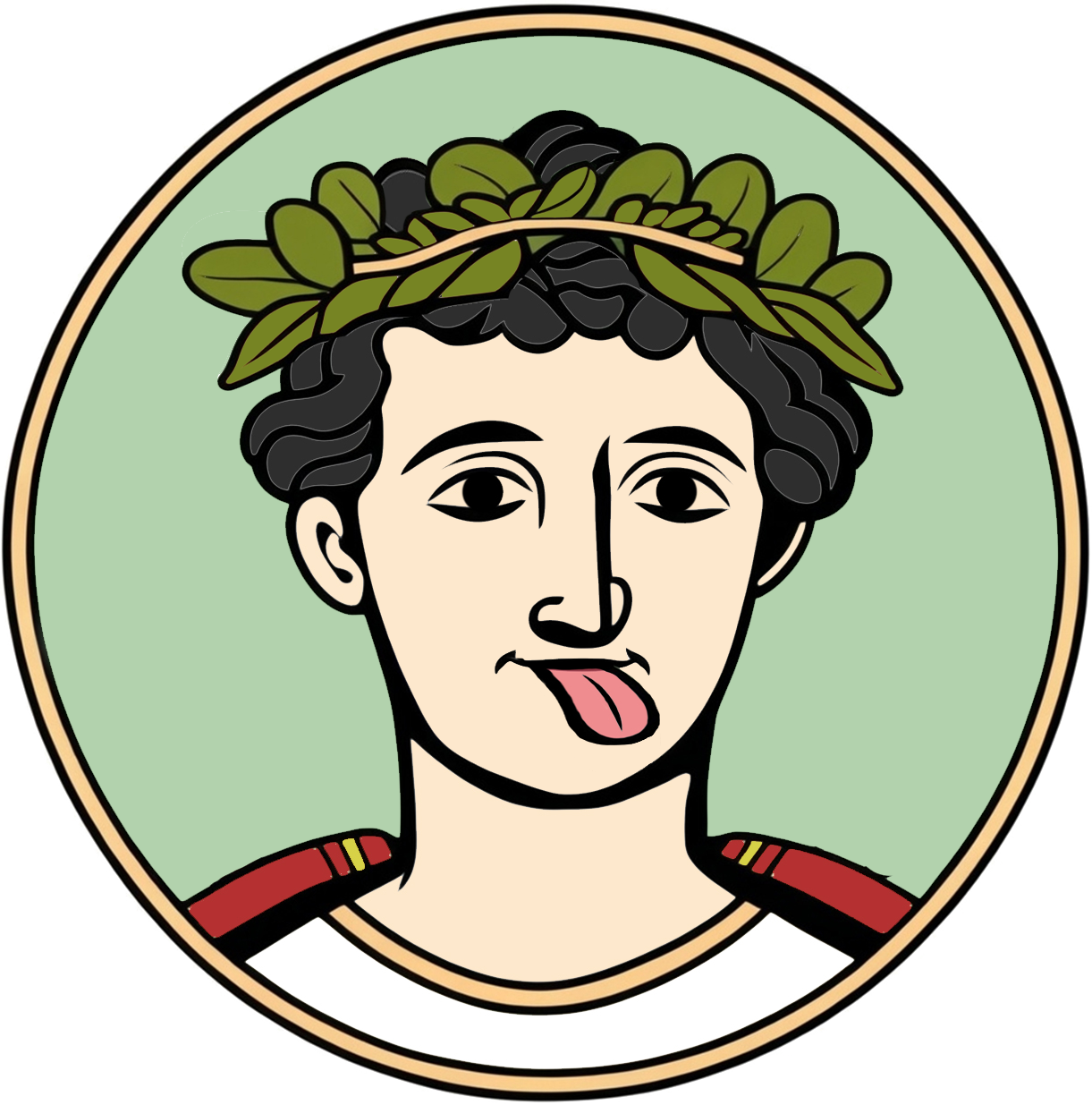
A journal that draws classical portraits has to decide whether the wreath is scenery. It is more interesting if it is not. The medallion can keep the laurel and still expect a reader to know which story is growing on the head. Mythology, in this sense, is not a box of characters. It is the memory inside an image that would otherwise look merely handsome.
The tongue does not cancel the story. It refuses the other failure, which is to look solemn about a symbol you have not actually read.