
The tongue and the laurel
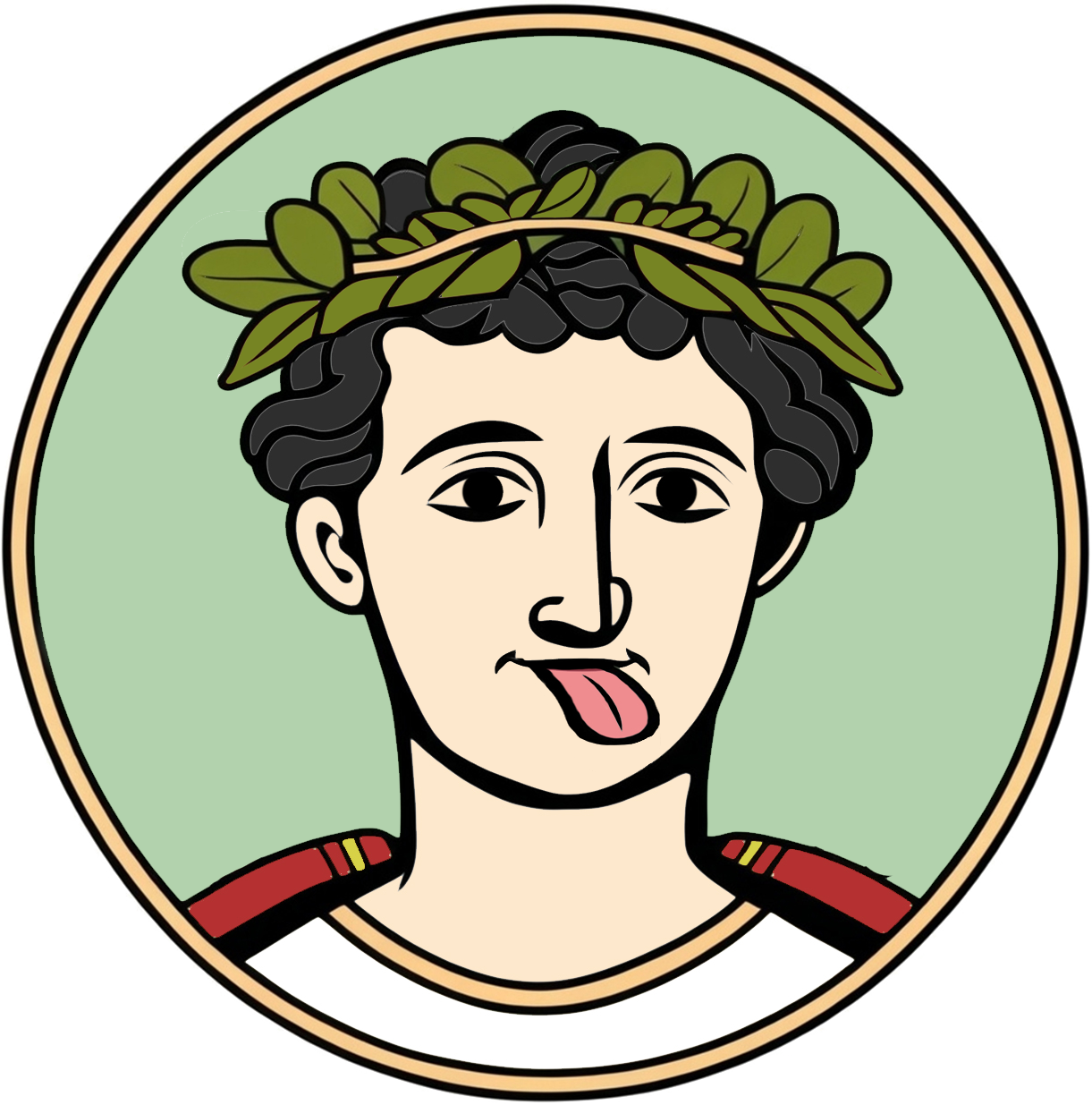
The portrait wears a laurel and sticks out its tongue. One of those is the old sign of poetic and athletic victory. The other is a refusal to look decorated. Put them in the same circle and you get the mood LogoFil is willing to keep: study, with a face.
Antiquity already had a word for work that is serious and comic at once. Greek criticism speaks of the spoudogeloion, the serious-comic. It is the register of certain philosophers and, later, of a writer like Lucian, who will stage the gods and the schools and decline to look reverent while he is being precise. The joke is not a holiday from the argument. It is one of the ways the argument moves.
The laurel has its own history, and it is not only a prize. In Ovid it is what remains of Daphne. Treating the wreath as a harmless logo would skip that story, which is why the mythology drawer exists and why this essay will not pretend the plant is innocent. A symbol can be worn and still be read.
So the tongue stays. It marks the difference between a journal and a monument. A monument asks to be admired from the path. A journal asks to be opened, argued with, and occasionally laughed at, including when the laugh belongs to the subject and not to a caption underneath it.